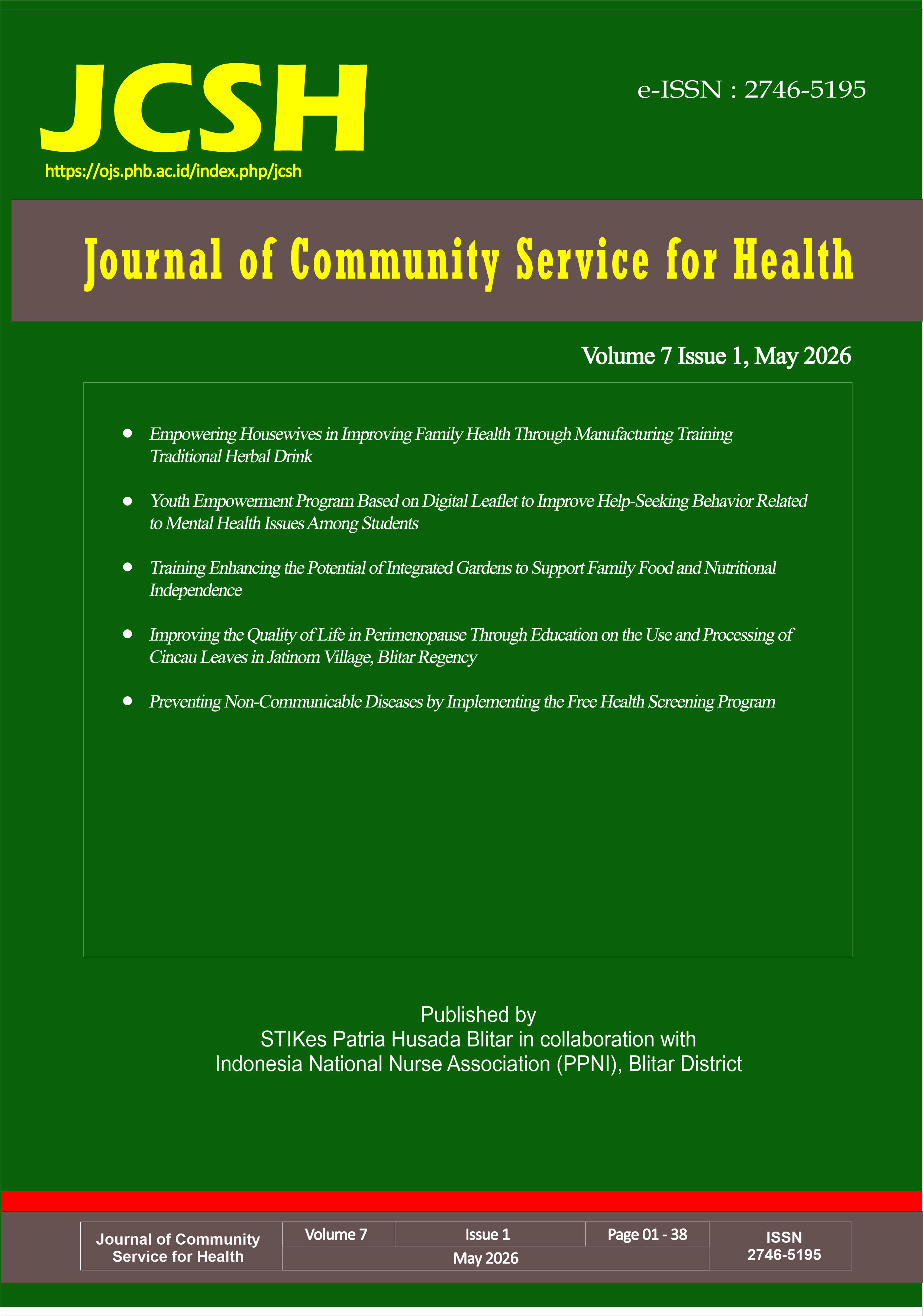
Training Enhancing the Potential of Integrated Gardens to Support Family Food and Nutritional Independence

Authors

DOI:

https://doi.org/10.26699/jcsh.v7i1.1281

Keywords:

Empowerment, Elderly, Integrated Garden, Used Gallon Jugs

Abstract

Introduction: The elderly are a vulnerable age group socially, economically, and health-wise, especially in rural and suburban areas. Based on data from the Ministry of Social Affairs of the Republic of Indonesia, approximately 40% of the total 25.67 million elderly in Indonesia are in the lowest socioeconomic status, which is categorized as vulnerable and potentially experiencing various physical and psychological problems. Methods: This community service activity carries the theme "Enhancing the Potential of Integrative Gardens as Supporters of Family Food and Nutrition Independence." This elderly empowerment program is a solution to prevent physical and psychological health problems and provides a platform for elderly people who have the potential to be economically productive. This program includes: 1) elderly-friendly gardening training, 2) small-scale livestock training, 3) local food management training, 4) marketing training, 5) elderly health training using medicinal plants around the house, and 6) group dynamics. This program is implemented in an integrated manner in the form of a Productive Elderly Class at the village hall. This community service has completed the first phase, namely training in creating an integrative garden with vegetable cultivation and raising catfish using used gallon jugs. Results: Participants' knowledge increased, from an average pretest score of 60.25 to 80 in the posttest. During the training, the elderly appeared enthusiastic and their productivity was evident, with the results of their planting media and catfish farming in used gallon jugs.

Author Biographies

Titik Juwariyah, STIKes Ganesha Husada Kediri (google scholar

Introduction: The elderly are a vulnerable age group socially, economically, and health-wise, especially in rural and suburban areas. Based on data from the Ministry of Social Affairs of the Republic of Indonesia, approximately 40% of the total 25.67 million elderly in Indonesia are in the lowest socioeconomic status, which is categorized as vulnerable and potentially experiencing various physical and psychological problems. Methods: This community service activity carries the theme "Enhancing the Potential of Integrative Gardens as Supporters of Family Food and Nutrition Independence." This elderly empowerment program is a solution to prevent physical and psychological health problems and provides a platform for elderly people who have the potential to be economically productive. This program includes: 1) elderly-friendly gardening training, 2) small-scale livestock training, 3) local food management training, 4) marketing training, 5) elderly health training using medicinal plants around the house, and 6) group dynamics. This program is implemented in an integrated manner in the form of a Productive Elderly Class at the village hall. This community service has completed the first phase, namely training in creating an integrative garden with vegetable cultivation and raising catfish using used gallon jugs. Results: Participants' knowledge increased, from an average pretest score of 60.25 to 80 in the posttest. During the training, the elderly appeared enthusiastic and their productivity was evident, with the results of their planting media and catfish farming in used gallon jugs.

Dewi Retno Puspitosari, Stikes Ganesha Husada Kediri

Introduction: The elderly are a vulnerable age group socially, economically, and health-wise, especially in rural and suburban areas. Based on data from the Ministry of Social Affairs of the Republic of Indonesia, approximately 40% of the total 25.67 million elderly in Indonesia are in the lowest socioeconomic status, which is categorized as vulnerable and potentially experiencing various physical and psychological problems. Methods: This community service activity carries the theme "Enhancing the Potential of Integrative Gardens as Supporters of Family Food and Nutrition Independence." This elderly empowerment program is a solution to prevent physical and psychological health problems and provides a platform for elderly people who have the potential to be economically productive. This program includes: 1) elderly-friendly gardening training, 2) small-scale livestock training, 3) local food management training, 4) marketing training, 5) elderly health training using medicinal plants around the house, and 6) group dynamics. This program is implemented in an integrated manner in the form of a Productive Elderly Class at the village hall. This community service has completed the first phase, namely training in creating an integrative garden with vegetable cultivation and raising catfish using used gallon jugs. Results: Participants' knowledge increased, from an average pretest score of 60.25 to 80 in the posttest. During the training, the elderly appeared enthusiastic and their productivity was evident, with the results of their planting media and catfish farming in used gallon jugs.

Ary Kristijono, Stikes Ganesha Husada Kediri

Introduction: The elderly are a vulnerable age group socially, economically, and health-wise, especially in rural and suburban areas. Based on data from the Ministry of Social Affairs of the Republic of Indonesia, approximately 40% of the total 25.67 million elderly in Indonesia are in the lowest socioeconomic status, which is categorized as vulnerable and potentially experiencing various physical and psychological problems. Methods: This community service activity carries the theme "Enhancing the Potential of Integrative Gardens as Supporters of Family Food and Nutrition Independence." This elderly empowerment program is a solution to prevent physical and psychological health problems and provides a platform for elderly people who have the potential to be economically productive. This program includes: 1) elderly-friendly gardening training, 2) small-scale livestock training, 3) local food management training, 4) marketing training, 5) elderly health training using medicinal plants around the house, and 6) group dynamics. This program is implemented in an integrated manner in the form of a Productive Elderly Class at the village hall. This community service has completed the first phase, namely training in creating an integrative garden with vegetable cultivation and raising catfish using used gallon jugs. Results: Participants' knowledge increased, from an average pretest score of 60.25 to 80 in the posttest. During the training, the elderly appeared enthusiastic and their productivity was evident, with the results of their planting media and catfish farming in used gallon jugs.

Diyan Wahyuningsih, Stikes Ganesha Husada Kediri

Introduction: The elderly are a vulnerable age group socially, economically, and health-wise, especially in rural and suburban areas. Based on data from the Ministry of Social Affairs of the Republic of Indonesia, approximately 40% of the total 25.67 million elderly in Indonesia are in the lowest socioeconomic status, which is categorized as vulnerable and potentially experiencing various physical and psychological problems. Methods: This community service activity carries the theme "Enhancing the Potential of Integrative Gardens as Supporters of Family Food and Nutrition Independence." This elderly empowerment program is a solution to prevent physical and psychological health problems and provides a platform for elderly people who have the potential to be economically productive. This program includes: 1) elderly-friendly gardening training, 2) small-scale livestock training, 3) local food management training, 4) marketing training, 5) elderly health training using medicinal plants around the house, and 6) group dynamics. This program is implemented in an integrated manner in the form of a Productive Elderly Class at the village hall. This community service has completed the first phase, namely training in creating an integrative garden with vegetable cultivation and raising catfish using used gallon jugs. Results: Participants' knowledge increased, from an average pretest score of 60.25 to 80 in the posttest. During the training, the elderly appeared enthusiastic and their productivity was evident, with the results of their planting media and catfish farming in used gallon jugs.

Edi Santoso, Stikes Ganesha Husada Kediri

Introduction: The elderly are a vulnerable age group socially, economically, and health-wise, especially in rural and suburban areas. Based on data from the Ministry of Social Affairs of the Republic of Indonesia, approximately 40% of the total 25.67 million elderly in Indonesia are in the lowest socioeconomic status, which is categorized as vulnerable and potentially experiencing various physical and psychological problems. Methods: This community service activity carries the theme "Enhancing the Potential of Integrative Gardens as Supporters of Family Food and Nutrition Independence." This elderly empowerment program is a solution to prevent physical and psychological health problems and provides a platform for elderly people who have the potential to be economically productive. This program includes: 1) elderly-friendly gardening training, 2) small-scale livestock training, 3) local food management training, 4) marketing training, 5) elderly health training using medicinal plants around the house, and 6) group dynamics. This program is implemented in an integrated manner in the form of a Productive Elderly Class at the village hall. This community service has completed the first phase, namely training in creating an integrative garden with vegetable cultivation and raising catfish using used gallon jugs. Results: Participants' knowledge increased, from an average pretest score of 60.25 to 80 in the posttest. During the training, the elderly appeared enthusiastic and their productivity was evident, with the results of their planting media and catfish farming in used gallon jugs.

Rizki Bahtiyar Ardyansah, Stikes Ganesha Husada Kediri

Introduction: The elderly are a vulnerable age group socially, economically, and health-wise, especially in rural and suburban areas. Based on data from the Ministry of Social Affairs of the Republic of Indonesia, approximately 40% of the total 25.67 million elderly in Indonesia are in the lowest socioeconomic status, which is categorized as vulnerable and potentially experiencing various physical and psychological problems. Methods: This community service activity carries the theme "Enhancing the Potential of Integrative Gardens as Supporters of Family Food and Nutrition Independence." This elderly empowerment program is a solution to prevent physical and psychological health problems and provides a platform for elderly people who have the potential to be economically productive. This program includes: 1) elderly-friendly gardening training, 2) small-scale livestock training, 3) local food management training, 4) marketing training, 5) elderly health training using medicinal plants around the house, and 6) group dynamics. This program is implemented in an integrated manner in the form of a Productive Elderly Class at the village hall. This community service has completed the first phase, namely training in creating an integrative garden with vegetable cultivation and raising catfish using used gallon jugs. Results: Participants' knowledge increased, from an average pretest score of 60.25 to 80 in the posttest. During the training, the elderly appeared enthusiastic and their productivity was evident, with the results of their planting media and catfish farming in used gallon jugs.

References

Achmad, W., Nurwati, N., & Sidiq, R. S. S. (2023). COMMUNITY ECONOMIC EMPOWERMENT THROUGH THE DEVELOPMENT OF MICRO AND SMALL AND MEDIUM ENTERPRISES : A CASE STUDY IN ALAMENDAH TOURISM. Journal of Economic Empowerment Strategy (JEES), 06(02), 99–104. https://doi.org/10.23969/jees.v6i2.9377

Agustana, R. S., Suparto, T. A., Sumartini, S., Purwandari, A., & Puspita, W. (2023). Pengaruh Aktivitas Fisik terhadap Fungsi Kognitif pada Lanjut Usia: Kajian Literatur. Jurnal Ilmiah Ners Indonesia, 4(1), 103–108. https://doi.org/10.22437/jini.v4i1.24971

Amira, I., Hendrawati, H., Maulana, I., Sumarni, N., & Rosidin, U. (2023). Upaya Peningkatan Kesehatan Jiwa Lansia Melalui Deteksi Dini dan Edukasi. Jurnal Kreativitas Pengabdian Kepada Masyarakat (PKM), 6(12), 5532–5540. https://doi.org/10.33024/jkpm.v6i12.12578

Andriyani, D., & Juliansyah, H. (2023). Pemanfaatan Limbah Rumah Tangga dan Pemberdayaan Remaja Untuk Peningkatan Pendapatan Rumah Tangga Di Desa Blang Pulo Kecamatan Muara Satu Kota Lhokseumawe. Jurnal Solusi Masyarakat, 1(1), 57–63. https://doi.org/10.29103/jsm.v1i1.10994

Carolina, T., Sundari, S., Agustini, A., & Suharyono, H. (2023). Pelatihan Urban Farming Untuk Meningkatkan Pemahaman Dalam Mendukung Ketahanan Pangan Masyarakat Di Bandar Lampung. Pucuk Rebung: Jurnal Pengabdian Kepada Masyarakat, 3(1), 62–72. https://doi.org/10.33578/pure.v3i1.p62-72

Dewi, R. K., & Nardina, E. A. (2024). Pemberdayaan Lansia Produktif : Upaya Meningkatkan Kualitas Hidup dan Fungsi Kognitif Lansia di Posyandu Mayangkara Rejosari Semarang. Jurnal Mandala Pengabdian Masyarakat, 2(2), 346–354. https://doi.org/10.35311/jmpm.v5i2.471

Dwi, K., Setyoningtias, D., Edy, D. F., Lestari, L. I., & Ulya, I. (2022). Lansia Produktif ?: Studi Literatur tentang Longevity. Fluorishing Journal, 2(7), 492–498. https://doi.org/10.17977/um070v2i72022p492-498

Fersa, K. A., Rafni, A., & Muchtar, H. (2024). Pemberdayaan lansia oleh kader Posyandu. Journal of Education, Cultural, and Politics (JECCO), 4(2), 258–274. https://doi.org/10.24036/jecco.v4i2.503

Gusmida, R., Barokah, S., Mulyani, E. A., Alpusari, M., Anggriani, M. D., & Hermita, N. (2025). Sustainable Waste Management melalui Eco-Entrepreneurship : Pelatihan untuk Mengubah Sampah Menjadi Berkah. KOMUNITA Jurnal Pengabdian Dan Pemberdayaan Masyarakat, 4(3), 536–545. https://doi.org/10.60004/komunita.v4i3.207

Iryani, S. W., & Murtiwidayanti, S. Y. (2020). Pilar-pilar keberdayaan lanjut usia : jalan menuju lansia perempuan sejahtera. Media Informasi Penelitian Kesejahteraan Sosial, 44(3), 253–268. https://doi.org/10.31105/mipks.v44i3.2379

Juwariah, T., Priyanto, A., & Nurhidayah. (2020). “Kampung SAHAJA” Sebagai Upaya Meningkatkan Kesadaran Masyarakat Tentang Pentingnya Pencegahan Gangguan Jiwa Dan Kepedulian Terhadap Kelompok Resiko Serta Gangguan Jiwa. Journal of Community Engagement and Employment, 2(2), 107–113. http://ojs.iik.ac.id/index.php/JCEE

Katriana. (2020). Kemensos: 40 persen lansia Indonesia berstatus rentan dan miskin.

Kemenkes RI. (2023). Strategi Pelayanan Kesehatan Lansia dalam Mewujudkan Lansia Tangguh. Promkes.Kemkes.Go.Id.

Kemenko PMK. (2021). Pemerintah Perkuat Program Pembinaan Ketahanan Keluarga Lansia dan Rentan. Kemenkopmk.Go.Id.

Luthfi, N. A., & Hanri, M. (2023). The Effect of Local Government ’ s Elderly Social Assistance on Health Spending of Poor Elderly in Indonesia. Jurnal Perencanaan Pembangunan:The Indonesian Journal of Development Planning, VII(2), 299–312. https://doi.org/10.36574/jpp.v7i2.403

Pusparini, G. A. (2022). Gender Gap Kondisi Sosial Ekonomi Penduduk Lanjut Usia Di Indonesia Tahun 2020. Journal Neo Societal, 7(4). https://doi.org/http://dx.doi.org/10.52423/jns.v7i4.24588

Puspitosari, A., & Nurhidayah, N. (2025). Pemberdayaan Menuju Lansia Tangguh Vokasional dengan Aktivitas Produktif. JGEN:Jurnal Pengabdian Kepada Masyarakat, 3(3), 345–352. https://doi.org/10.60126/jgen.v3i3.925

Putria, A. C., & Pratama, G. (2023). Empowerment of MSMEs as a Strategy for Improving Welfare in the Indonesian Economic Context. Journal of Islamic Economic Development, 1(1), 1–3. https://jied.staiku.ac.id/index.php/st/article/view/4/11

Renidayati, R., & Rachmadanur, N. (2022). Peningkatan Kemandirian Lansia Melalui Okupasi Terapi dan Psychotheraphydi Panti Sosial Tresna Werdha Sicincin Padang Pariaman. Jurnal Pembangunan Nagari, 7(1), 31–40. https://doi.org/10.30559/jpn.v7i1.282

Rokom. (2024). Indonesia Siapkan Lansia Aktif dan Produktif. Sehatnegriku.Kemkes.Go.Id.

Safira Ramadhani, A., Suwena, I. W., & Aliffiati, A. (2020). Peran Lanjut Usia dalam Masyarakat dan Keluarga pada Pemberdayaan Lanjut Usia di Kelurahan Lesanpuro Kota Malang. Sunari Penjor : Journal of Anthropology, 4(2), 48–57. https://doi.org/10.24843/sp.2020.v4.i02.p01

Sari, N. R., Nugroho, S. W., Sulistyowati, R., Agustina, R., Yulianto, K. T., & Anggraeni, G. (2024). Statistik Penduduk Lanjut Usia 2024 (Y. Rachmawati, R. Sinang, & B. Santoso (eds.); 21st ed.). Badan Pusat Statistik. https://web-api.bps.go.id/download.php?f=cgcwfr38eLGIY7/l2MKSLEFSeVl0YjNUcEo0TEV6K01XWFFZYUVPZjdPOFBnOXh0VEJFOHhYVjh0V0N1aThwUWxaWEMzRFViUks2aDdUZTFvdlBreXF1YTN2WWJydXRNUVdKSVNXYmE0VTZUaHNVZnMxMFoxQkxLeFNsNHFZZE9meXR3elRlRGcvZlFZd3h3a2ZWSHo0M3FnaW05QXRDTH

Seftiani, S., & Vibriyanti, D. (2020). Penyelenggaraan Program Bina Keluarga Lansia ( BKL ) Di Wilayah Perkotaan : Potret Permasalahan Klasik. Jurnal Kependudukan Indonesia, 15(1), 59–70. https://doi.org/10.14203/jki.v15i1.533

Setiyorini, E., & Wulandari, N. A. (2018). Asuhan Keperawatan Lanjut Usia Dengan Penyakit Degeneratif. In Tim MNC Publishing (Ed.), Mnc (Cetakan I). MNC Publishing. https://www.google.co.id/books/edition/Asuhan_Keperawatan_Lanjut_Usia_dengan_Pe/mMVGEAAAQBAJ?hl=id&gbpv=0

Sihab, B. A., & Nurchayati. (2021). Loneliness Pada Lansia Yang Tinggal Sendiri. Character: Journal Penelitian Psikologi, 8(8), 165–175.

Sipollo, B., & Syukkur, A. (2022). Pemberdayaan Kader Posyandu Lansia dengan Pengenalan dan Pelatihan Optimasi Active Aging. Kolaborasi: Jurnal Pengabdian Masyarakat, 2(5), 384–390. https://doi.org/10.56359/kolaborasi.v2i5.136

Soelaksini, L. D., Alif, T., Widodo, T. W., Muhklisin, I., & Puspa, D. (2025). Wall Gardening Sebagai Strategi Pemberdayaan Masyarakat Perkotaan Melalui Konsep Urban Farming. SEJAGAT : Jurnal Pengabdian Masyarakat, 1(3), 128–132. https://doi.org/10.25047/sejagat.v1i3.5637

Winarti, S., Nurlianti, I., Sujatmiko, P., Hartono, B., & Daud, A. G. (2025). Literature Review : Aksesibility of demands for Health in Aging Population : Case in Indonesia. JurnalPendidikan Tambusai, 9(3), 30258–30268. https://doi.org/10.31004/jptam.v9i3.31930

Downloads

Published

31-05-2026

How to Cite

Juwariyah, T., Puspitosari, D. R., Kristijono, A., Wahyuningsih, D., Santoso, E., & Ardyansah, R. B. (2026). Training Enhancing the Potential of Integrated Gardens to Support Family Food and Nutritional Independence. Journal of Community Service for Health, 7(1), 015–022. https://doi.org/10.26699/jcsh.v7i1.1281

Issue

Section

Articles