The Effectiveness of Interactive Demonstration in Improving Tooth Brushing Techniques School-Aged Children
DOI:
https://doi.org/10.26699/jnk..v13i1.ART.p106-116Keywords:
Interactive demonstrations, Behavior, Tooth brushingAbstract
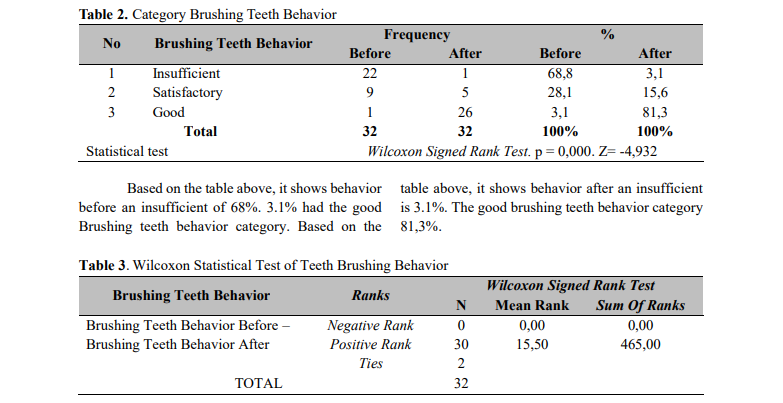
Incorrect tooth brushing techniques in school-aged children can lead to dental and oral problems, such as tooth decay, cavities, and dental caries. One approach used to improve good tooth brushing habits is through demonstrations. Interactive demonstrations are an effective method to enhance school children's understanding, helping them develop the correct knowledge and habits for proper tooth brushing. This study aims to analyze the effectiveness of interactive demonstrations in improving proper tooth-brushing techniques among school-aged children at SD YBPK Kediri. The research design was a pre-experiment with a one-group pre-test and post-test design. The population consisted of 32 fourth and fifth-grade students at SD YBPK Kediri. The inclusion criteria for the study were children aged 7–12 years, those who attended school during data collection, and those willing to participate in the study. A total sampling technique was applied. Data were analyzed using the Wilcoxon test. Before the interactive demonstration, the children's tooth brushing behavior was suboptimal, with 22 respondents (68.8%) demonstrating inadequate brushing techniques. There was a significant improvement in tooth brushing techniques after the interactive demonstration, with a significance value of 0.000 (p < 0.05). The interactive demonstration was found to be highly effective in improving tooth-brushing behavior among school-aged children at SD YBPK Kediri
References
A Gonie, L. T., S Wowor, V. N., & Wayan Mariati, N. (2025). Effectiveness of Dental Health Education Using Demonstration Method on Increasing Knowledge about Tooth Brushing among Elementary School Students. 13(2), 266–271. https://doi.org/10.35790/eg.v13i2.57
Adynur, P. M. R., Prasetyowati, S., & Sarwo Edi, I. (2023). Pengetahuan Tentang Kesehatan Gigi dan Mulut Pada Siswa Kelas IV SDN Baratajaya Surabaya. Surabaya Dental Therapist Journal, 1(2), 3025–4701. https://doi.org/10.36568/sdtj
Al-Sharani, H. M., Stormon, N., Al-Hutbany, N., Zhang, Y., & Zulfiqar, T. (2025). Optimal tooth brushing initiation age and frequency for preventing early childhood caries: a systematic review and meta-analysis. In BMC Oral Health (Vol. 25, Number 1). BioMed Central Ltd. https://doi.org/10.1186/s12903-025-07179-5
Astarani, K., Yentus, A., Regita, A., Henny, C., Nelli, D., Irawanda, D., Sanjaya, D. A., Dwiseptyani, E., & Anggara, F. (2023). Upaya Peningkatan Ketrampilan Gosok Gigi Pada Anak di SD YBPK Kediri. Kontribusi: Jurnal Penelitian Dan Pengabdian Kepada Masyarakat, 3(2), 139–149. https://doi.org/10.53624/kontribusi.v3i2.198
Ayal, A. T. A., Fitri Anggraeni, & Dwi Ambarwati. (2024). IMPLEMENTASI PENDIDIKAN KESEHATAN ORAL HYGIENE TERHADAP PENCEGAHAN KARIES GIGI PADA ANAK USIA PRA SEKOLAH DI PAUD KUNTUM MEKAR. Jurnal Manajemen Kesehatan Dan Keperawatan, 1(2). https://doi.org/10.35968/36b15x67
Cahyani, C., & Marliana, S. (2025). Tingkat Kesadaran Pemeliharaan Kesehatan Rongga Mulut pada Anak Sekolah Dasar. E-GiGi, 14(1), 165–169. https://doi.org/10.35790/eg.v14i1.62345
Erchick, D. J., Agrawal, N. K., Khatry, S. K., Katz, J., LeClerq, S. C., Reynolds, M. A., & Mullany, L. C. (2020). Adherence to and acceptability of three alcohol-free, antiseptic oral rinses: A community-based pilot randomized controlled trial among pregnant women in rural Nepal. Community Dentistry and Oral Epidemiology, 48(6), 501–512. https://doi.org/10.1111/cdoe.12562
Fuadah, N. T., Fransiska Helena, D., Tazkiyah, I., Studi, P., Keperawatan, S., Ners, D. P., & Keperawatan, F. (2023). DAMPAK MENGONSUMSI MAKANAN KARIOGENIK DAN PERILAKU MENGGOSOK GIGI TERHADAP KESEHATAN GIGI ANAK USIA SEKOLAH DASAR. https://doi.org/10.37287/jppp.v5i2.1586
Gunawan, I., Nurmalasari, A., Widyastomo, J., Rifda, N., & Gunawan, E. (2026). EKSPLORASI PENINGKATAN PENGETAHUAN KEBERSIHAN MULUT ANAK USIA PRASEKOLAH MELALUI PROGRAM EDUKASI DI TK AL-MUNAWAROH KEDIRI. Jurnal Ners, 10(1), 1431–1435. https://doi.org/10.31004/jn.v10i1.52973
Gurav, K. M., Shetty, V., Vinay, V., Bhor, K., Jain, C., & Divekar, P. (2022). Effectiveness of Oral Health Educational Methods among School Children Aged 5–16 Years in Improving their Oral Health Status: A Meta-analysis. International Journal of Clinical Pediatric Dentistry, 15(3), 338–349. https://doi.org/10.5005/jp-journals-10005-2395
Haloho, D. N., Bintang, G. V., Widjaja, G. A., Sihombing, J. S., Abigayl, I., & Lesmana, D. (2025). Efektivitas Penyuluhan Menggunakan Video Animasi Mengenai Cara Menyikat Gigi dengan Benar pada Anak Sekolah Dasar. E-GiGi, 13(2), 390–397. https://doi.org/10.35790/eg.v13i2.60233
Hasrini, Jauharuddin; Arfiah, Sartika; Dewi, Maritsa; Amirah, & Ahkam; Zahrawi Astrie. (2023). Program Penyuluhan Edukasi Perilaku Menggosok Gigi pada Anak Usia Sekolah di SD Pertiwi Makassar. Jurnal Nusantara Berbakti, 1(1), 124–128. https://doi.org/10.59024/jnb.v1i1.419
Heny Noor Wijayanti. (2023). Edukasi Kesehatan Gigi dan Mulut dalam Upaya Meningkatkan Kesehatan Gigi pada Anak Sekolah Dasar. Room of Civil Society Development, 2(4), 153–160. https://doi.org/10.59110/rcsd.201
Irfan; Mohamad, Rahman; Abdul, & Erlita Distriani Patade; Agnes. (2024). Hubungan Cara Menyikat Gigi Terhadap Pengetahuan Kesehatan Gigi Pada Anak Usia Sekolah Dasar Inpres 1 Tondo Kelurahan Tondo kecamatan Mantikulore. Jurnal Kesehatan Ilmiah Indonesia, 9(2). https://doi.org/10.51933/health.v9i2.1639
Junaidi, Sri Gumilar, M., & Febrianti, S. (2023). Dental Health Education and Improving Skill of Brushing Teeth Using Virtual Reality Applications for Early Childhood in Pondok Meja Village in 2023. 8(2). https://doi.org/10.25047/j-dinamika.v8i2.3936
Kementerian Kesehatan RI. (2020). Panduan Cuci Tangan Pakai Sabun (CTPS). 1–34.
Kementerian Kesehatan RI. (2022). Rencana Strategis (Renstra) Kementerian Kesehatan 2022-2024. In Kemenkes RI. Kementrian Kesehatan Republik Indonesia.
Khan, I. M., Mani, S. A., Doss, J. G., Danaee, M., & Kong, L. Y. L. (2021). Pre-schoolers’ tooth brushing behaviour and association with their oral health: a cross-sectional study. BMC Oral Health, 21(1). https://doi.org/10.1186/s12903-021-01643-8
Lam, P. P. Y., & Duangthip, D. (2025). Editorial: Improving children’s oral health. In Frontiers in Oral Health (Vol. 6). Frontiers Media SA. https://doi.org/10.3389/froh.2025.1636820
Larasati, R., Farida Wahyuni, D., Prasetyowati, S., Hadi, S., Keperawatan, J., Politeknik, G., Kementerian, K., & Surabaya, K. (2022). SYSTEMATIC LITERATURE REVIEW: KNOWLEDGE AND BRUSHING BEHAVIOR IN ELEMENTARY SCHOOL AGE CHILDREN (Vol. 4). https://doi.org/10.36086/jkgm.v4i1.823
Mariati, N. W., Wowor, V. N. S., & Tasya, M. (2023). Hubungan Tingkat Pengetahuan dengan Kejadian Karies Gigi pada Anak Usia Sekolah di Desa Wori. E-GiGi, 12(2), 199–206. https://doi.org/10.35790/eg.v12i2.51333
Min, S. N., Duangthip, D., Gao, S. S., & Detsomboonrat, P. (2024). Early childhood caries and its associated factors among 5-years-old Myanmar children. Frontiers in Oral Health, 5. https://doi.org/10.3389/froh.2024.1278972
Mutia, N., Sabil, F. A., & Kadir, A. (2022). Pengaruh Pemberian Edukasi Terkait Kejadian Karies Gigi Terhadap Pengetahuan Dan Peran Orang Tua Pada Anak. 2(2). https://doi.org/10.36059/jimpk.v2i2.724
Napitupulu, D. F. G. D. (2023). HUBUNGAN KEBIASAAN MENYIKAT GIGI DENGAN KARIES GIGI PADA ANAK USIA SEKOLAH. Jurnal Keperawatan Priority, 6(1). https://doi.org/10.34012/jukep.v6i1.2948
Nasrah, & Mardelita, S. (2024). Efektivitas Penyuluhan Kesehatan Gigi dan Mulut dengan Metode Demonstrasi dan Simulasi terhadap Keterampilan Menyikat Gigi pada Siswa Sekolah Dasar. Global: Jurnal Ilmiah Multidisiplin, 1(3), 73–79. https://doi.org/10.37985/global.v1i3.36
Ngatemi, & Purnama, T. (2021). Counseling with Tooth Brushing Demonstration Method as an Effort to Improve Tooth Brushing Skills and the Status of Dental and Oral Hygiene in Early Childhood at School. https://doi.org/10.37506/mlu.v21i1.2391
Nurzamilah, R., Megananda, R., Putri, H., Praptiwi, Y. H., Supriyanto, I., Keperawatan, J., Poltekkes, G., & Bandung, K. (2020). GAMBARAN KETERAMPILAN MENYIKAT GIGI PADA ANAK USIA 5 TAHUN. Jurnal Kesehatan Siliwangi, 1(1). https://doi.org/10.34011/jks.v1i1.607
Putri Arum, Y., Yulia Maritasari, D., & Antoro, B. (2023). FAKTOR-FAKTOR YANG BERHUBUNGAN DENGAN KEJADIAN KARIES GIGI PADA REMAJA DI KLINIK GIGI CHEESE BANDAR LAMPUNG TAHUN 2022. Dental Health Journal, 10(1). https://doi.org/10.33992/jkg.v7i1
Quinn, P., & Harding, M. (2025). Tooth brushing learning methods: time to change practice? In Evidence-Based Dentistry (Vol. 26, Number 3, pp. 135–136). Springer Nature. https://doi.org/10.1038/s41432-025-01175-y
Rahmi, S. A., Juni Mulia, R., Sara, F., Rahman, W. A., & Kesehatan Banjarmasin, P. (2023). Penggunaan Media Yang Efektif Dalam Promosi Kesehatan Gigi Dan Mulut Pada Anak Sekolah Dasar. JIKES : JURNAL ILMU KESEHATAN Tahun 2023, 1(2), 203–209. https://doi.org/10.71456/jik.v1i2.278
Ratna, M., Wulandari, K., Keperawatan, S., Bina, S., Bali, U., & Artikel, R. (2024). The Effect of Animation Media Combination with Demonstration Learning on Brush Teeth Ability Pre School Children at Widya Kusuma Sari Kindergarten. Jurnal Aliansi Keperawatan Indonesia, 1(1). https://doi.org/10.55887/jaki.v1i1.3
Rindiani Kurnia, Weslei Daeli, & Yeni Kyoto. (2024). Hubungan Perilaku Kesehatan Menggosok Gigi dengan Karies Gigi pada Anak Usia Sekolah di SDN Karangsari Cianjur Tahun 2022. Protein : Jurnal Ilmu Keperawatan Dan Kebidanan. , 2(1), 163–168. https://doi.org/10.61132/protein.v2i1.128
Ripana, N., Widyagdo, A., & Daniati, N. (2024). HUBUNGAN PENGETAHUAN DAN PERILAKU MENYIKAT GIGI DENGAN KEBERSIHAN GIGI DAN MULUT PADA ANAK KELAS 3 SEKOLAH DASAR NEGERI 2 WALED KOTA KABUPATEN CIREBON. Jurnal Ilmiah Keperawatan Gigi (JIKG), 5(2). https://doi.org/10.37160/jikg.v5i2.548
Sabilillah, M. F., Kusnanto, H., Hanindriyo, L., & Kuswandari, S. (2025). Effect of oral health education model on tooth brushing behavior and oral hygiene among children with intellectual disabilities. Brazilian Dental Science, 28(1). https://doi.org/10.4322/bds.2025.e4653
Siregar, R. A., & Batubara, N. S. (2021). Penyuluhan PHBS dan Demonstrasi Cara Cuci Tangan dan Sikat Gigi yang Benar di Desa Simatohir Kecamatan Padangsidimpuan Angkola Julu. Jurnal Pengabdian Masyarakat Aufa (JPMA), 3. https://doi.org/10.51933/jpma.v3i1.342
Sudiartana; I Made, Suparsa, I. N., Putri, N. M. A. V., & Tari, N. K. W. (2024). PENTINGNYA MENJAGA KESEHATAN GIGI MELALUI DEMONSTRASI CARA MENYIKAT GIGI YANG BAIK DAN BENAR DI TIGA PAUD. Jurnal Abdi Dharma Masyarakat (JADMA), 5(2), 108–120. https://doi.org/10.36733/jadma.v5i2.10267
Sumadewi, K. T., & Harkitasari, S. (2023). Edukasi Kesehatan Gigi dan Mulut serta Cara Menggosok Gigi pada Anak Sekolah Dasar di Banjar Bukian, Desa Pelaga. Journal WMMJ Warmadewa Minesterium Medical Journal, 2(1), 1–7.
Tavakoli, S., Saadatfar, N., & Tiyuri, A. (2025). The effectiveness of school-based supervised tooth brushing intervention for preventing dental caries: a systematic review and meta-analysis. In BMC Oral Health (Vol. 25, Number 1). BioMed Central Ltd. https://doi.org/10.1186/s12903-025-07299-y
Tobing, M., Indah, I., Wati, A., Divina, P. Y., & Gunawan, E. (2026). EFEKTIVITAS PROGRAM EDUKASI DALAM MENINGKATKAN PERILAKU KESEHATAN GIGI DAN MULUT ANAK USIA PRASEKOLAH DI TK AL-JAWAHIR KEDIRI. JURNAL NERS, 10, 1393–1397. https://doi.org/10.31004/jn.v10i1.53046
Umairahmah, N., & Indah Prasetya, F. (2024). ANALISIS FAKTOR YANG MEMENGARUHI PERILAKU MENGGOSOK GIGI PADA ANAK: LITERATUR REVIEW. Jurnal Kesehatan Gigi Dan Mulut (JKGM), 6(2), 2024–2746. https://doi.org/10.36086/jkgm.v6i2.2566
Uribe, S. E., Innes, N., & Maldupa, I. (2021). The global prevalence of early childhood caries: A systematic review with meta-analysis using the WHO diagnostic criteria. In International Journal of Paediatric Dentistry (Vol. 31, Number 6, pp. 817–830). John Wiley and Sons Inc. https://doi.org/10.1111/ipd.12783
Utami, S. P., Mahata, I. B. E., Ningrum, V., Amran, R., & Wiyanti, R. (2024). Relationship between Tooth Brushing Behavior and Dental Caries in Children at 27 Sungai Sapih Public Elementary School Kuranji, Padang City. E-GiGi, 12(2), 162–167. https://doi.org/10.35790/eg.v12i
Wardani, I. K., Dewi, R. K., Adhani, R., & Garcia, A. (2024). Toothbrushing Behavior and The Incidence of Dental Caries In Children. Jurnal Berita Ilmu Keperawatan, 17(2), 196–201. https://doi.org/10.23917/bik.v17i2.4502
Widyastomo, J., Indriyasari, A., Tobing, M., & Gunawan, I. (2025). Optimalisasi Kebersihan Gigi dan Mulut pada Kegiatan Penyuluhan Interaktif di PG & TK ABA VI. Journal of Community Development | E-ISSN, (6), 977–987. https://doi.org/10.47134/comdev.v6i2.1
Wilis, R., & Rosalin. (2025). Hubungan Perilaku Menggosok Gigi Dengan Kebersihan Gigi Dan Mulut Pada Anak Usia Sekolah Dasar Di SD Negeri 16 Bay Pass Gampong Cot Bau Kota Sabang. Poltekkes Kemenkes Aceh, 19(1), 48–56. https://doi.org/10.30867/nasuwakes.v18i1.768
Yildiz, Ş., & Ataş, O. (2025). In vitro evaluation of the effectiveness of pediatric drugs and tooth brushing on the surface roughness of different restorative dental materials used in pedodontics. Dental Journal, 58(2), 120–127. https://doi.org/10.20473/j.djmkg.v58.i2.p120-12
Downloads
Published
Issue
Section
License
Copyright (c) 2026 Jurnal Ners dan Kebidanan (Journal of Ners and Midwifery)

This work is licensed under a Creative Commons Attribution-ShareAlike 4.0 International License.